A New Book — March 2027
Injustice of the Peace
Power, Poverty, and America's Eviction Courts
“Just Mercy meets Evicted.”Adam Benforado, New York Times bestselling author of Unfair
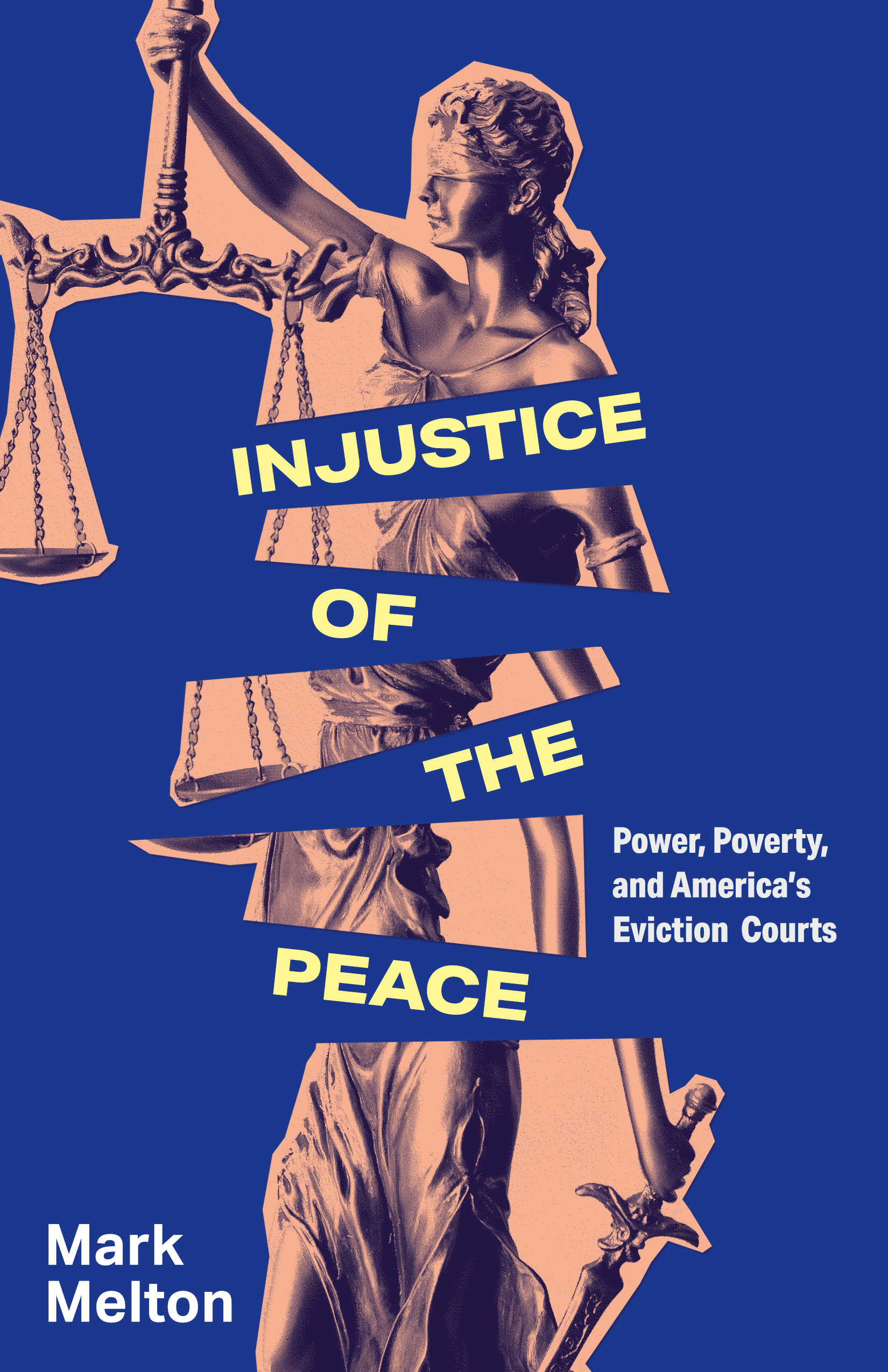
Power, Poverty, and America's Eviction Courts
“Just Mercy meets Evicted.”Adam Benforado, New York Times bestselling author of Unfair
From the courtrooms of the wealthy and powerful to the living rooms of the impoverished and forgotten, Injustice of the Peace tells the story of poverty in America through the lens of a legal system that has become more of a tool of the wealthy than a bastion of truth and justice.
When attorney Mark Melton founded the Dallas Eviction Advocacy Center in 2020, he saw it as a way to give back to his community as a person who knew firsthand how devastating eviction and poverty could be. He didn't anticipate the fight for fair housing to be so hard — or for the work to transform his life. What began as a pro-bono project to ease the burdens of his evicted neighbors during the pandemic quickly grew into one of the largest and most effective tenant defense organizations in the United States. In Injustice of the Peace, Melton tells the story of that movement, painting an affecting picture of the housing crisis and the broken systems of power that continue to manufacture it.
Told through first-hand accounts of Dallas residents — from single mothers working tirelessly to make ends meet, to elderly couples living in units with no reliable electricity or hot water, to entire communities haunted by histories of redlining and illegal repossession — Injustice of the Peace explores the racial, economic, legal, and social strings in the web of injustice that make the rich richer and the poor, poorer. What emerges is a deeply moving, accessible roadmap to America's housing crisis and a rallying cry for a more compassionate, humane future.
“With powerful stories of battling an eviction system rigged for landlords—in the courthouse, the statehouse, and tenants’ front yards—Mark Melton offers a rousing personal history of his unlikely transformation into a tireless advocate for due process. Injustice of the Peace is both an indictment of a legal order that fails the most vulnerable and a practical playbook for anyone hoping to fight back through innovative advocacy. Just Mercy meets Evicted.”
— Adam Benforado, New York Times bestselling author of Unfair: The New Science of Criminal Injustice
“Injustice of the Peace is a vivid account of what happens when the protections of the law exist on paper but disappear in practice. Drawing on years spent inside eviction courts and alongside tenants facing the loss of their homes, Mark Melton shows with bracing clarity the difference the simple presence, or absence, of legal representation can make. Reading this remarkable book only reinforced for me how utterly essential legal services are to any serious response to this country’s housing and homelessness crisis—and how little rights mean when no one is there to insist they be honored.”
— Brian Goldstone, Pulitzer Prize–winning author of There Is No Place for Us: Working and Homeless in America
“Democracy is more than voting and elections. At its essence it is neighbors and strangers working together to do the things we couldn’t accomplish by ourselves. Mark exemplifies this by serving those who by circumstance or by design would otherwise never have a shot. If you care about housing, dignity, or the basic promise of equal justice, this is essential reading. An inspiring story.”
— Beto O’Rourke, former U.S. Congressman

The pandemic receded, but the things I saw during it didn't. Some nights I want nothing more than to close the door, pour a drink, and let other people's lives go back to being other people's lives. It would be easy. I could do it tomorrow.
But the faces won't stay at a distance. I can't pretend they weren't real. That pinch in the corners of their eyes when they realize they're giving a tell; when you see the water well up, resting on the top of their lower eyelid just before a tear forms to fall down their cheek. They turn their head as they dry their eyes in a poorly concealed effort to hide their shame. And I oblige them. I pretend I don't see so they can salvage their dignity.
Two documentary features about the eviction-defense work at the heart of the book.
Launch news, tour dates, and the stories that didn’t make the book.
One email a month, at most. Unsubscribe anytime.
Reserve your copy from any retailer below.